Picazo House


- COMPLETED CONSTRUCTION
- 2016
- 400M2
- YACHT NORDELTA, BA - ARG
design brief
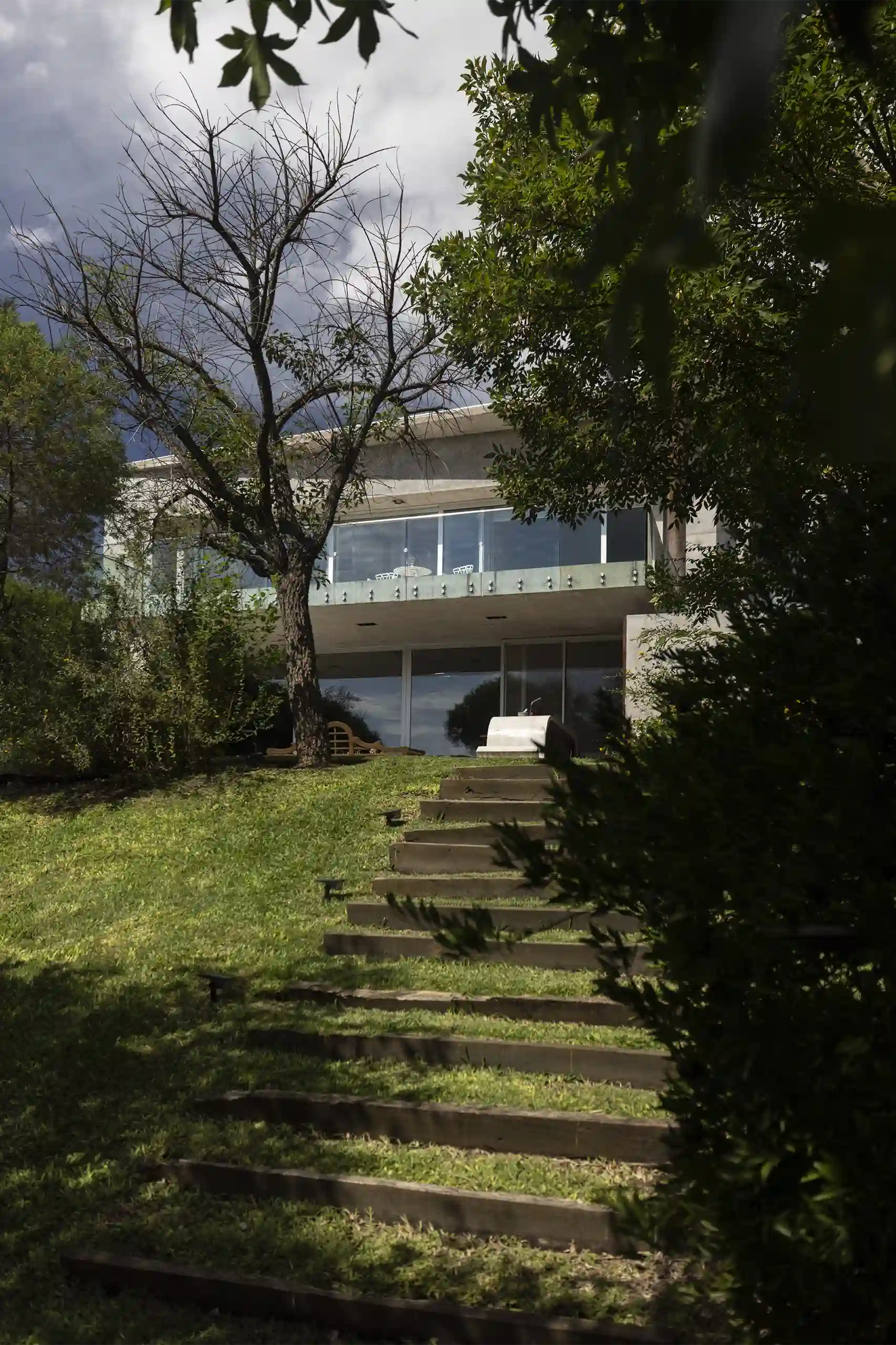
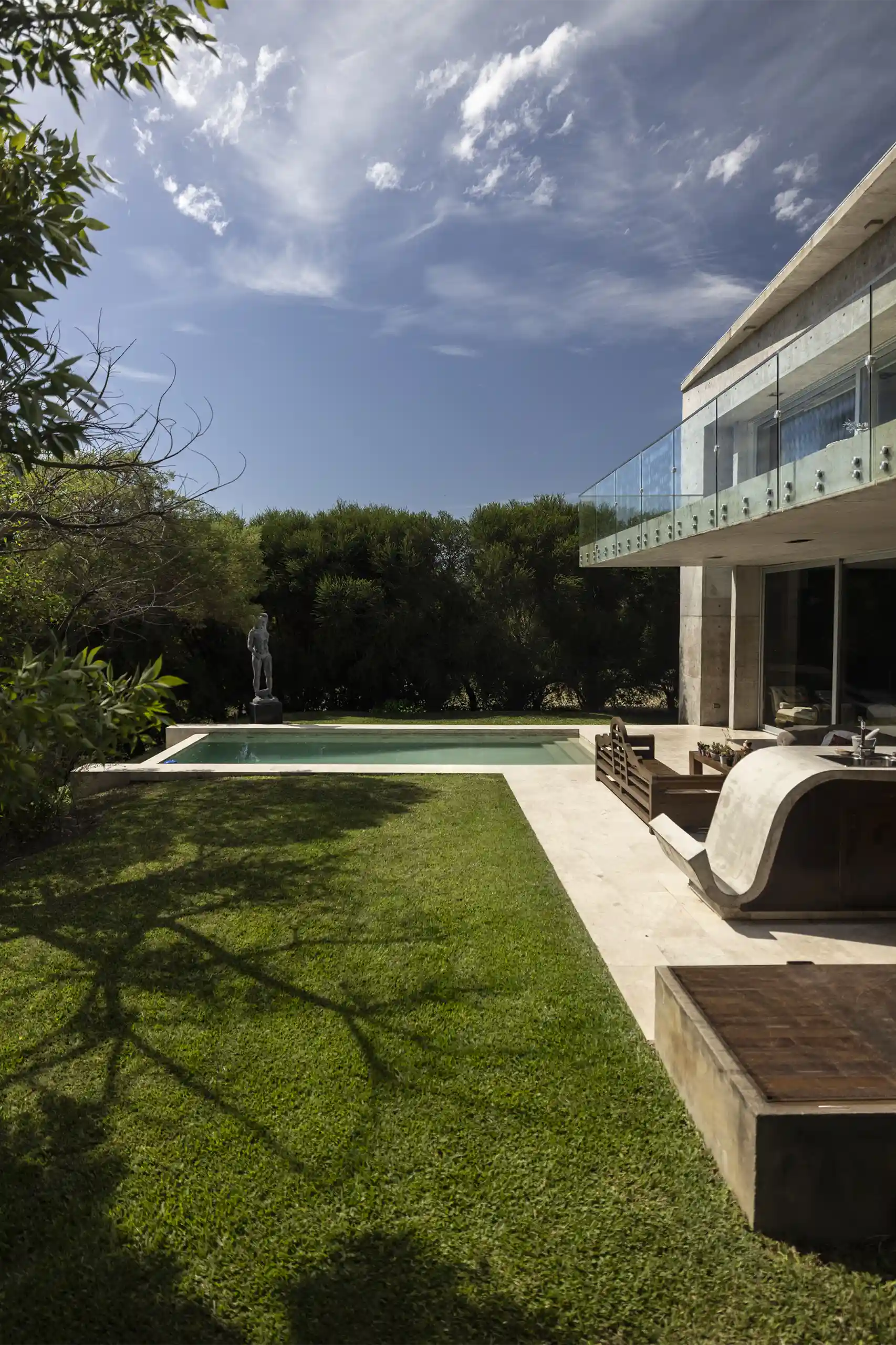
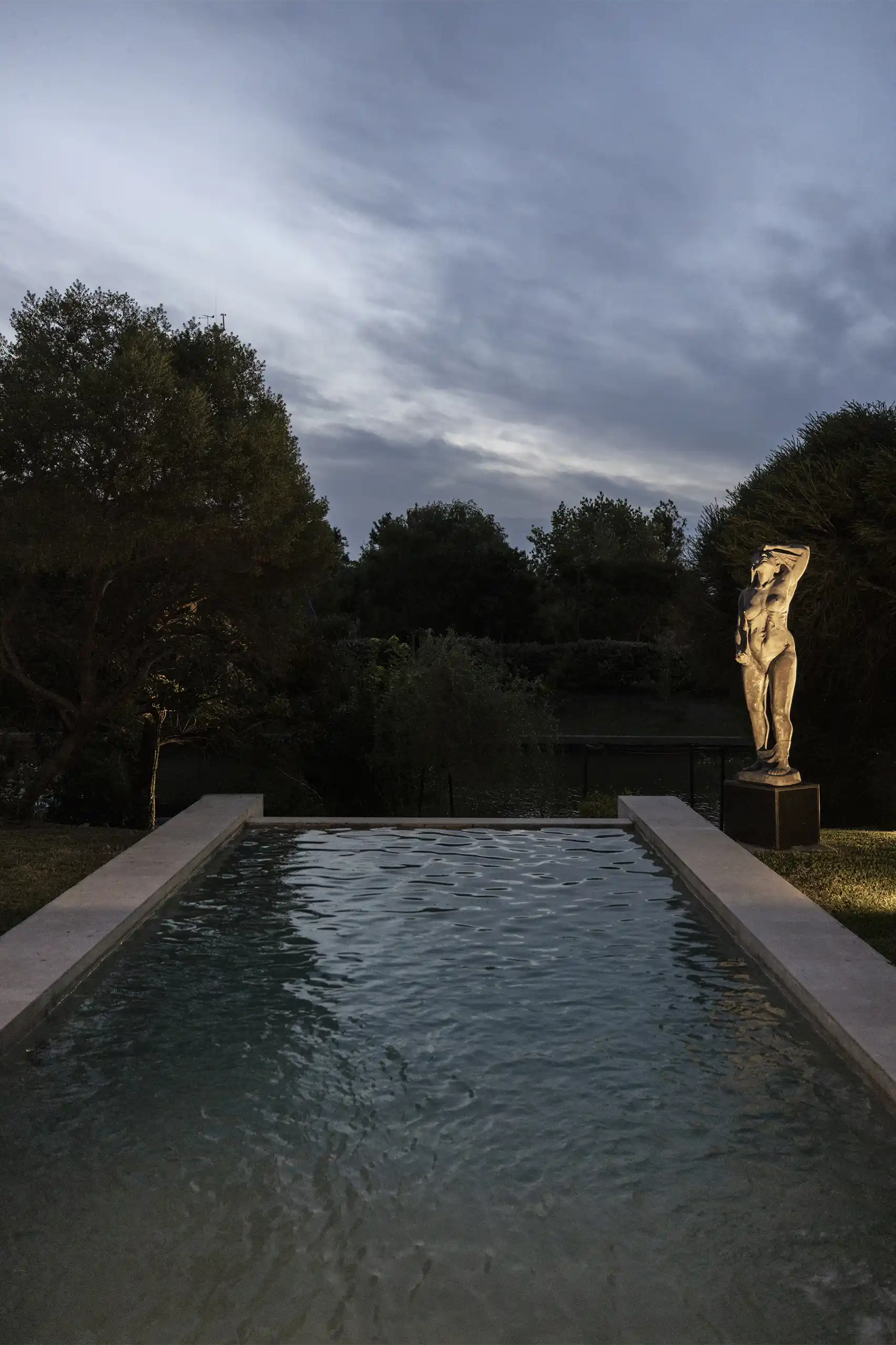
Located in the nautical neighborhood of El Yacht, in Nordelta, this residence sits on a privileged plot defined by its open views toward the Luján River and an extensive native wetland reserve that shapes the rear landscape. In response to this natural setting, the project is conceived as an architecture that turns inward toward the street while opening generously toward the garden and the river horizon.
The house originates from the very first meeting with its owners. From that initial conversation, a clear intention emerged: to create an essential architecture. A seemingly simple exposed concrete volume, capable of containing within it a rich spatial and luminous complexity — one that could support the family’s everyday life while also serving as a backdrop for their art collection.
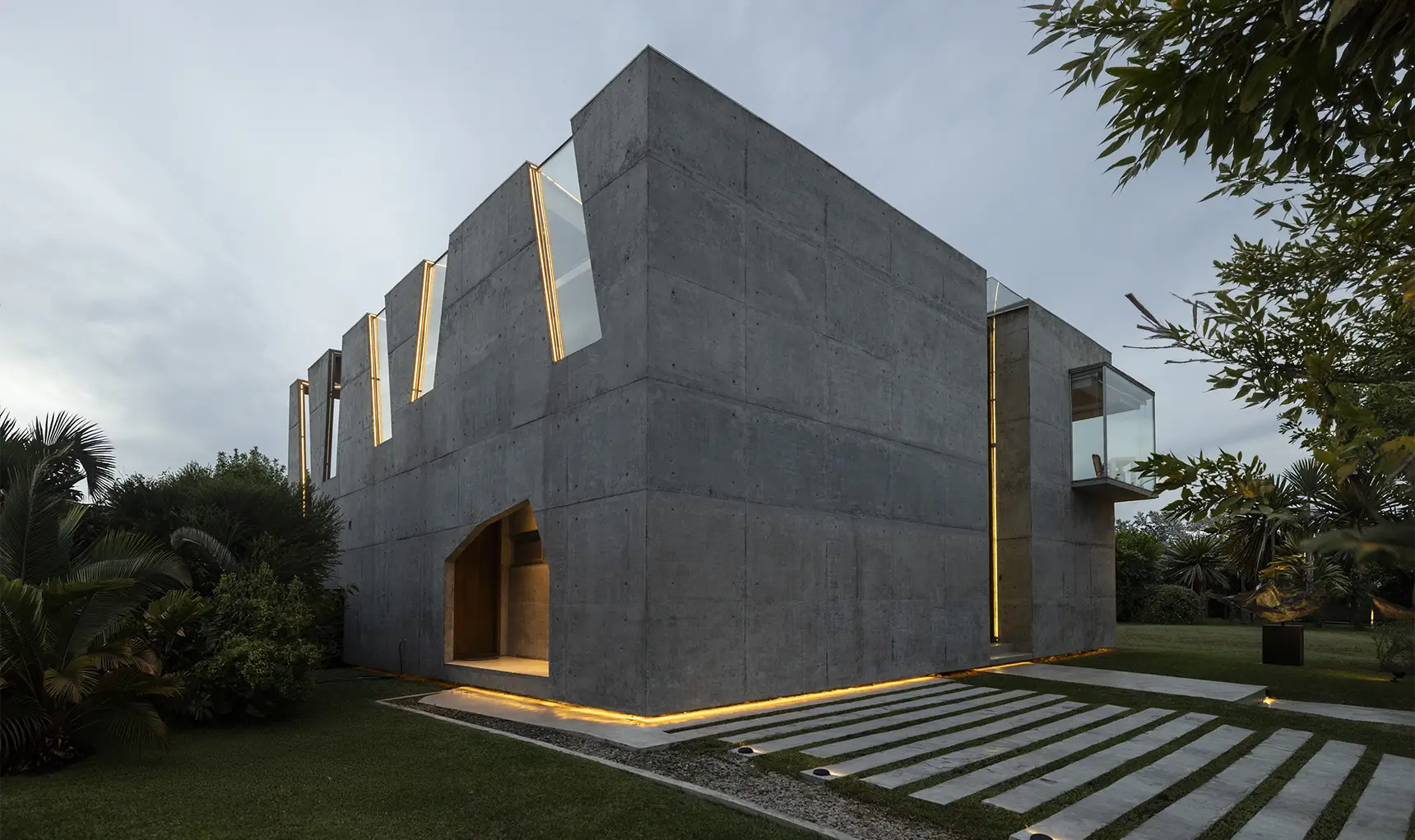
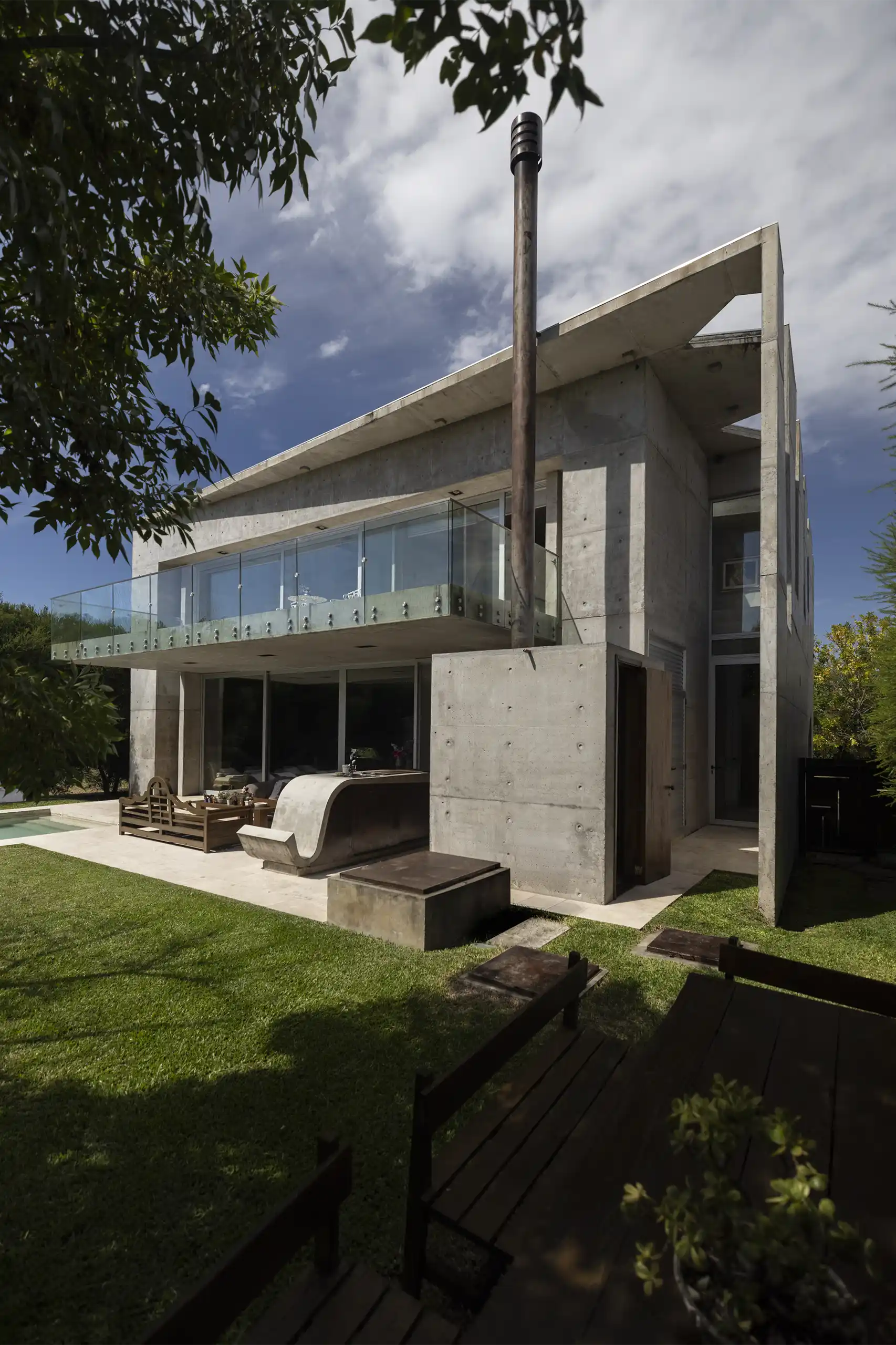
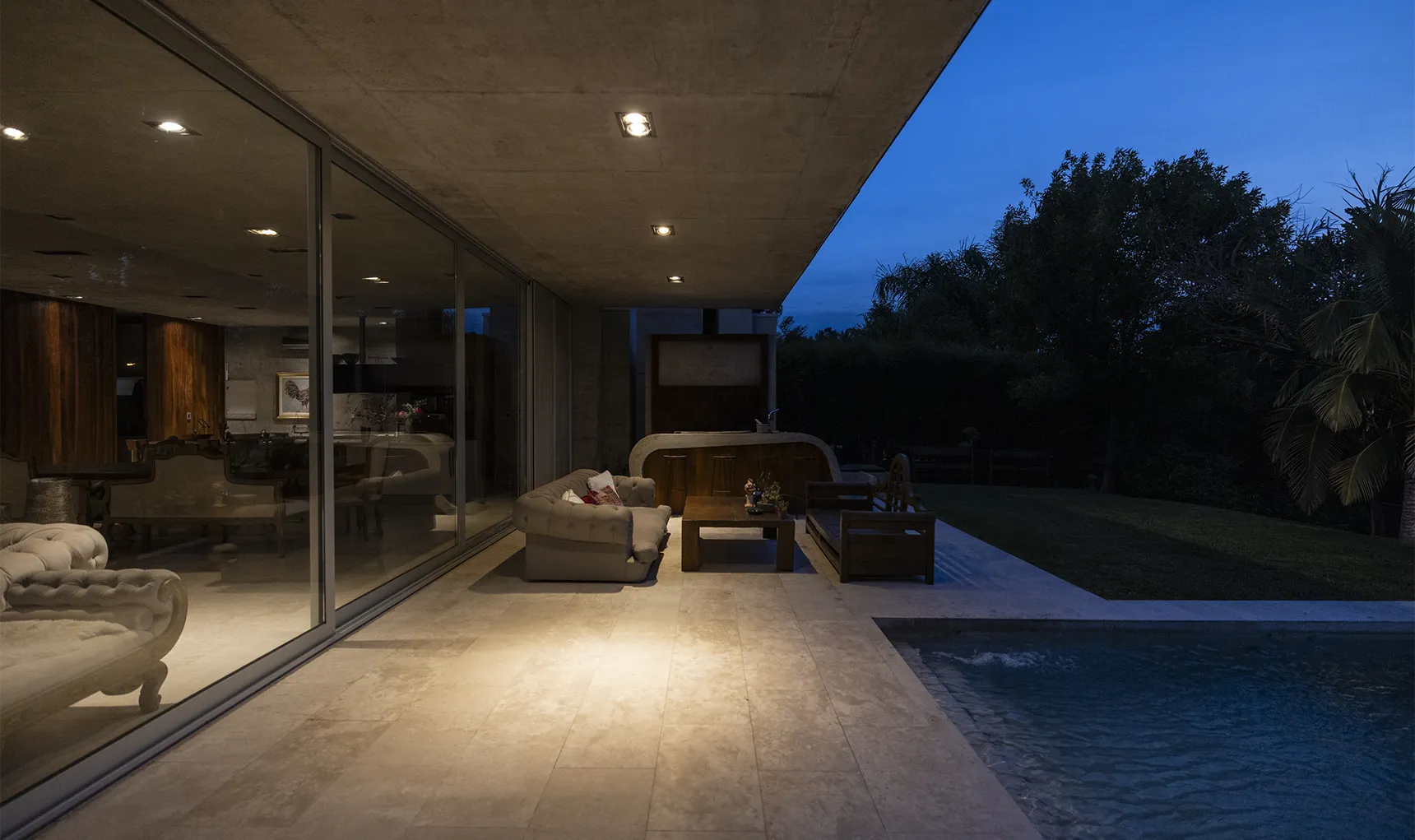
The project takes shape as a large monolithic concrete cube. Toward the urban front, it appears almost hermetic, with its mass protecting the privacy of domestic life. In contrast, the rear façade opens widely to the garden, the river, and the depth of the landscape, allowing the life of the house to extend outward into the natural horizon.
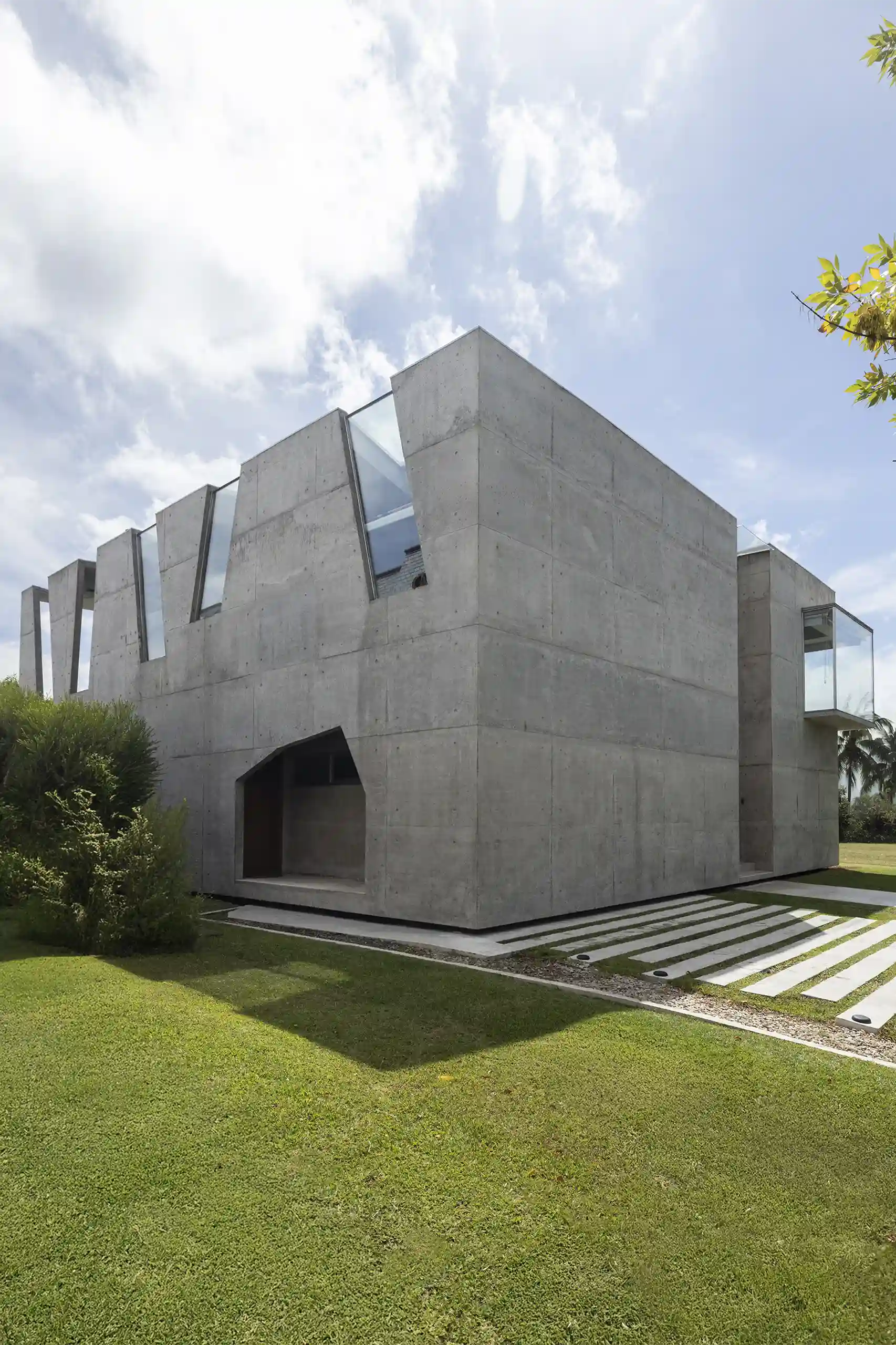
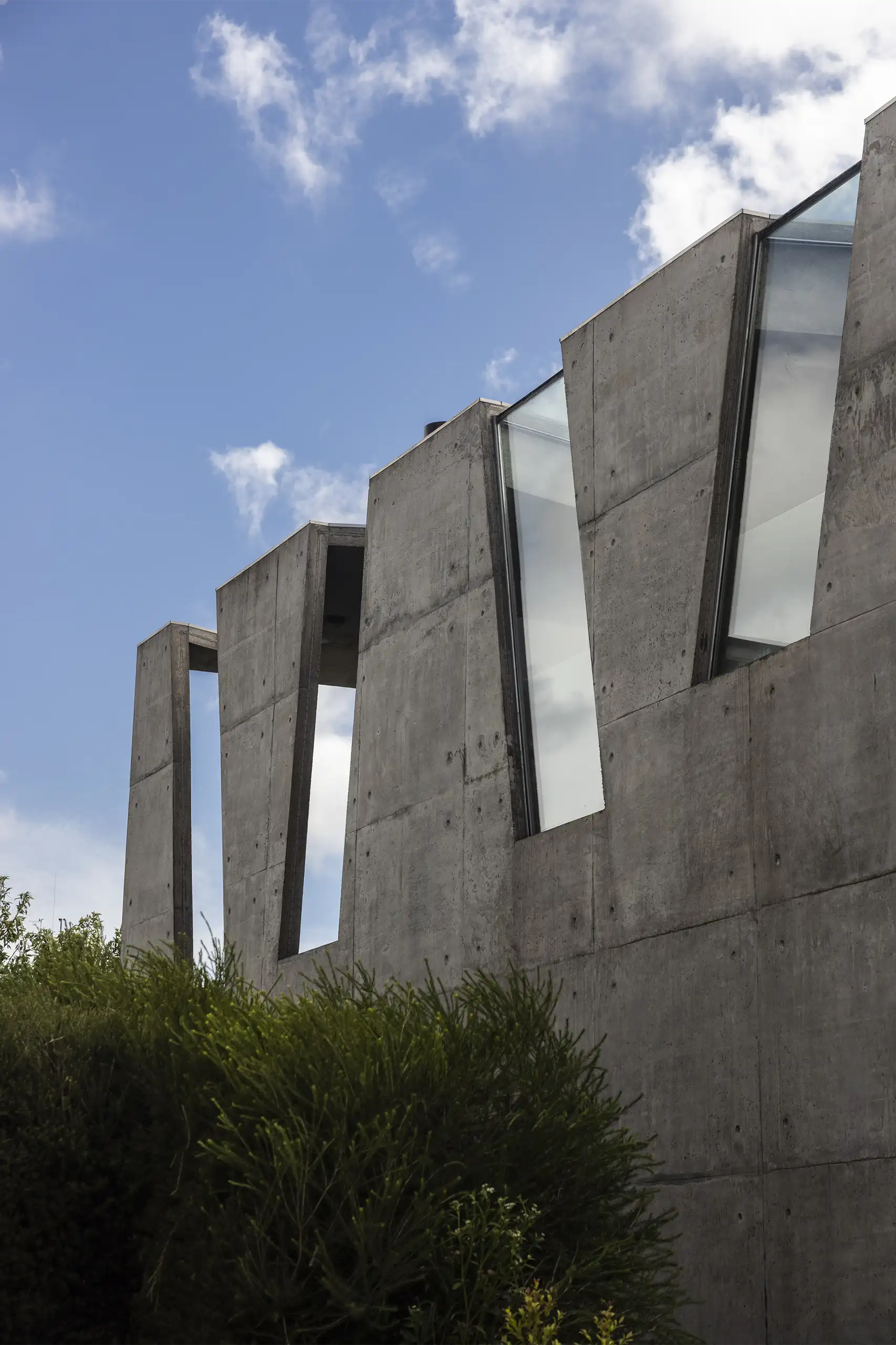
The cube’s morphology — simple in appearance yet complex in execution — is defined by a fundamental operation: subtraction.
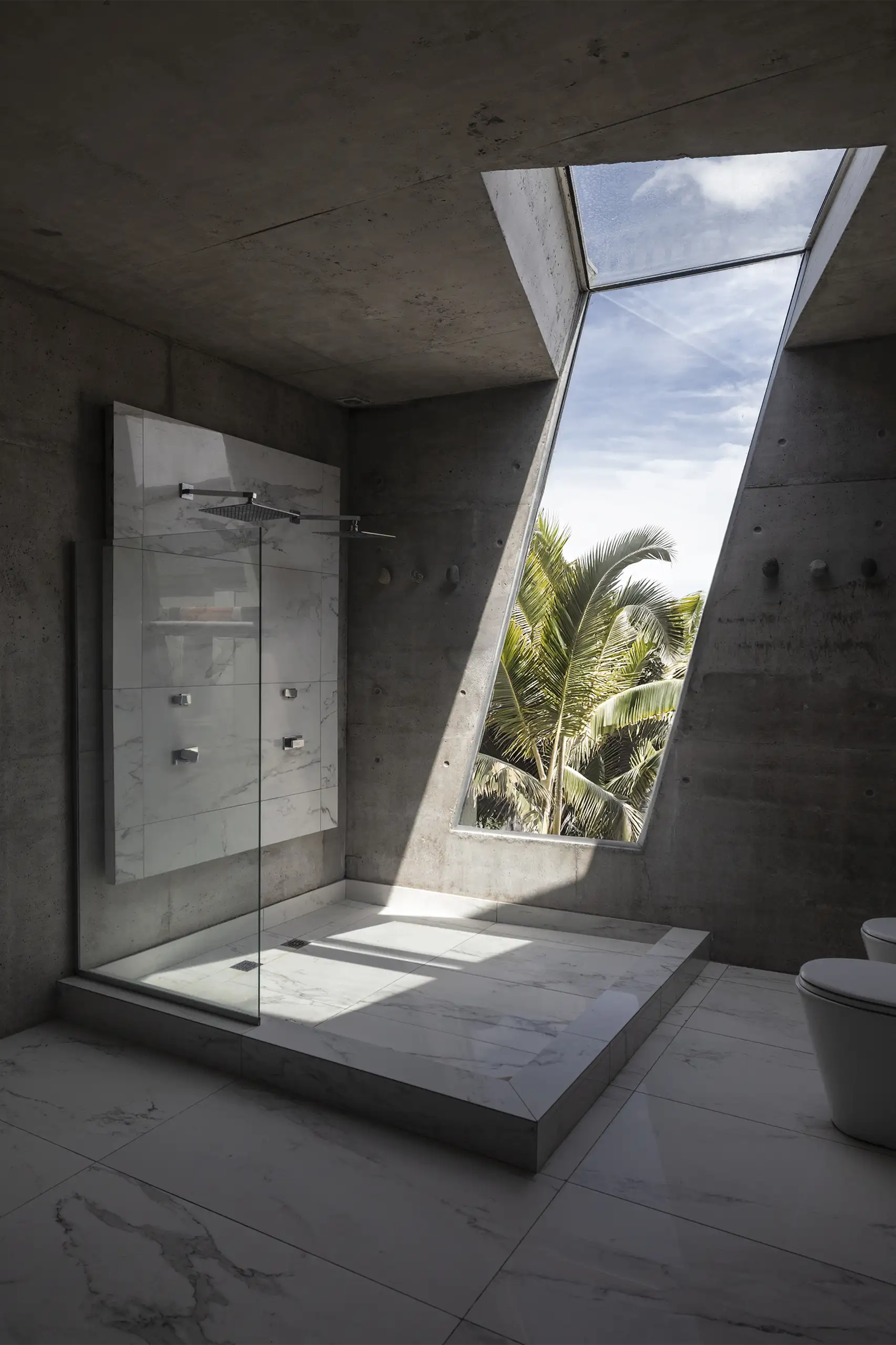
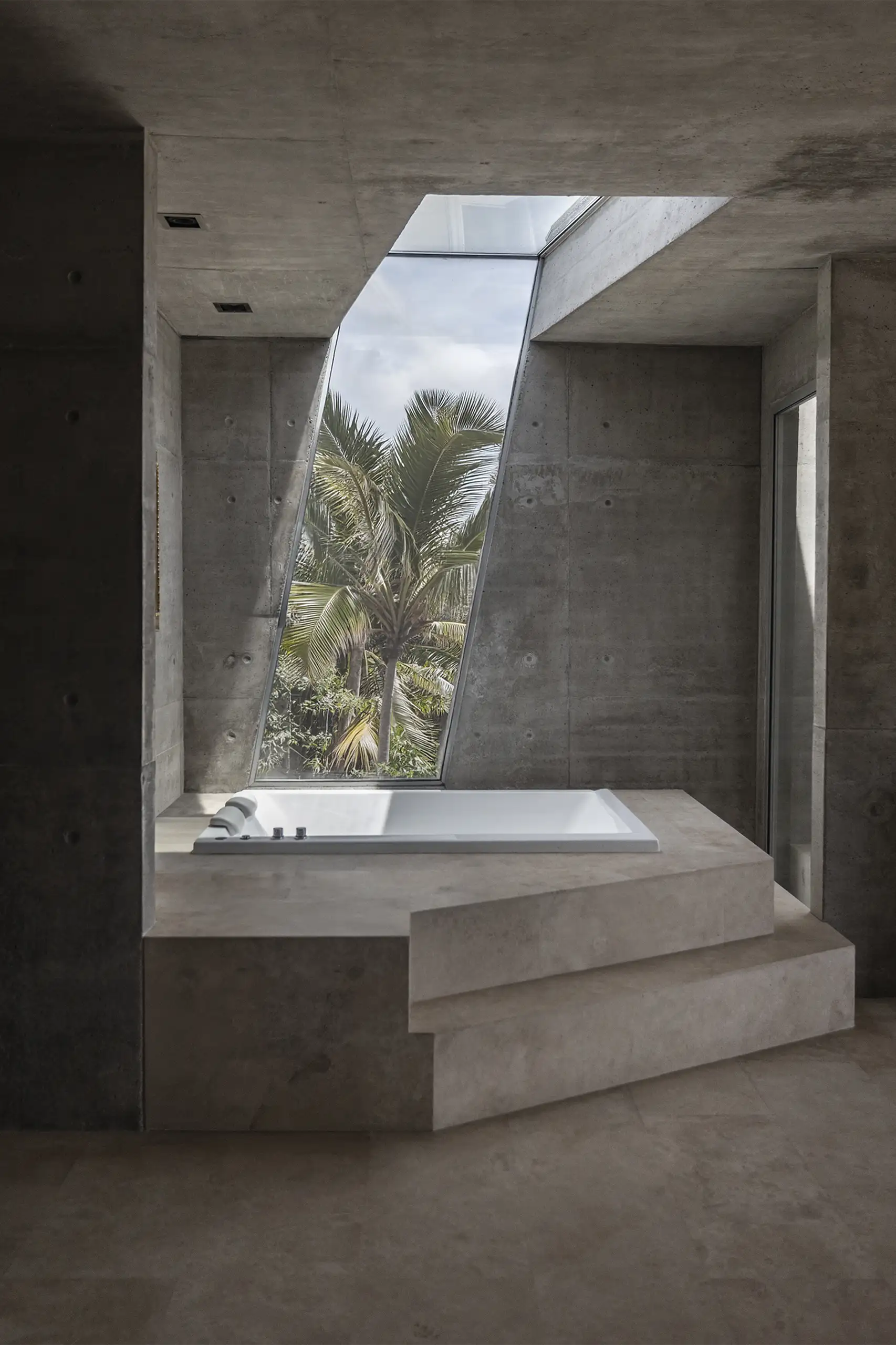
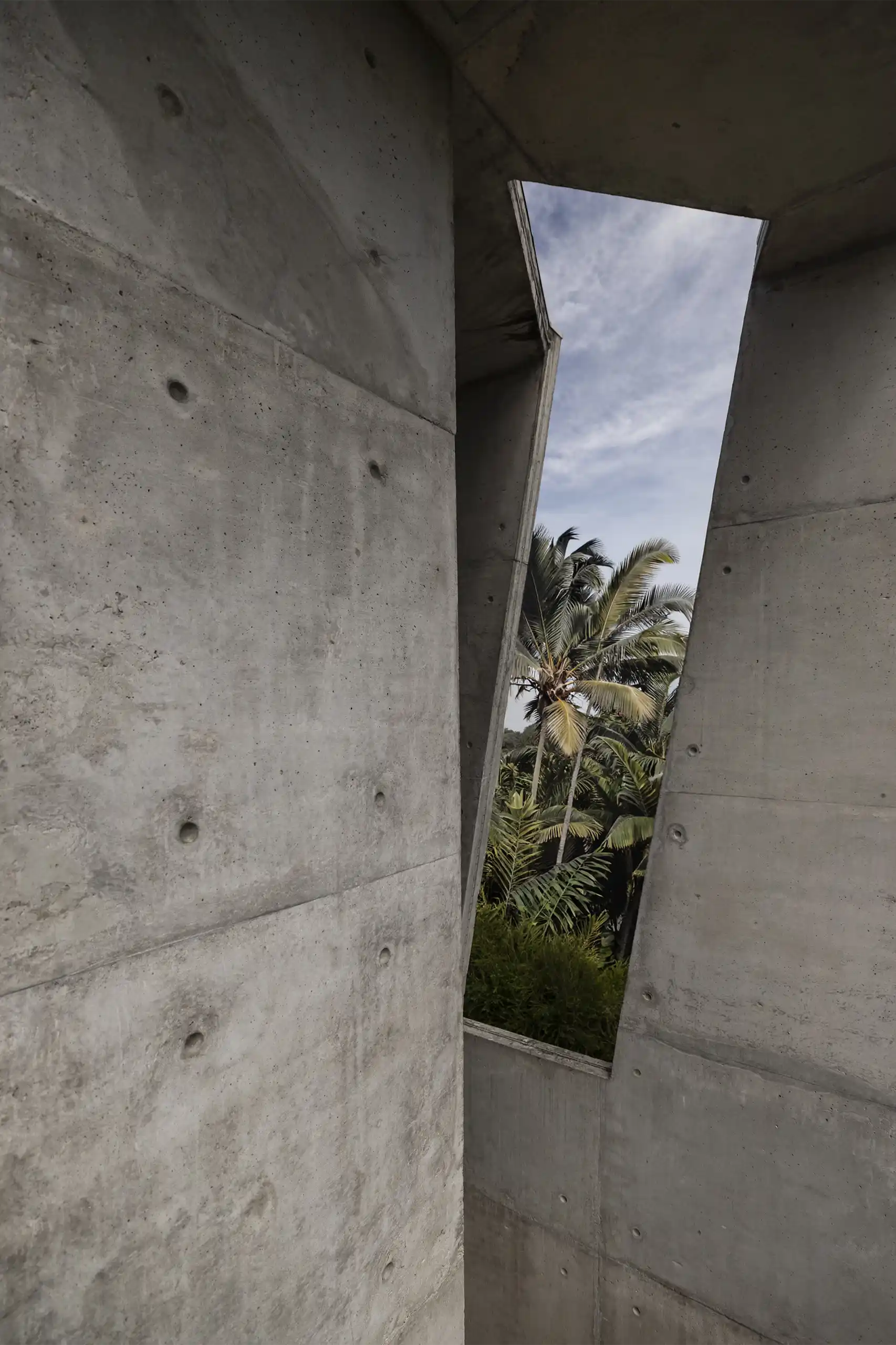
Vertical and horizontal cuts carve into the walls and roof, allowing controlled natural light to enter while creating unexpected atmospheres within the monolithic volume. In more intimate spaces, such as the main bathroom, the jacuzzi, and the walk-in closet, these openings even allow views of the night sky, incorporating the presence of the stars into the everyday living experience.
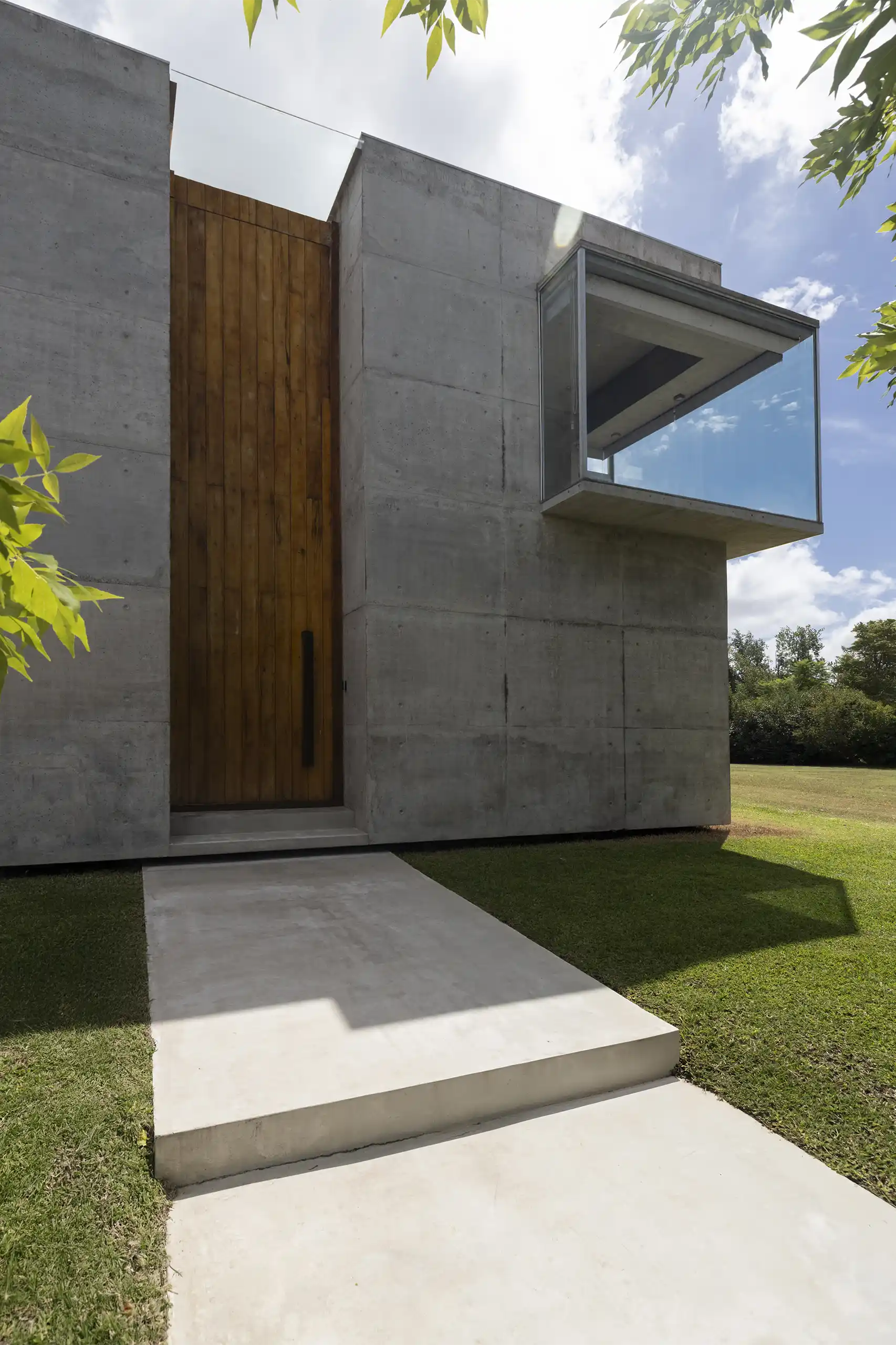
The main entrance follows this same design logic. A vertical incision cuts through the concrete volume, marking the entry with a double-height wooden pivot door. This gesture reveals the thickness of the mass and creates a threshold where the solidity of concrete contrasts with the warmth of wood.
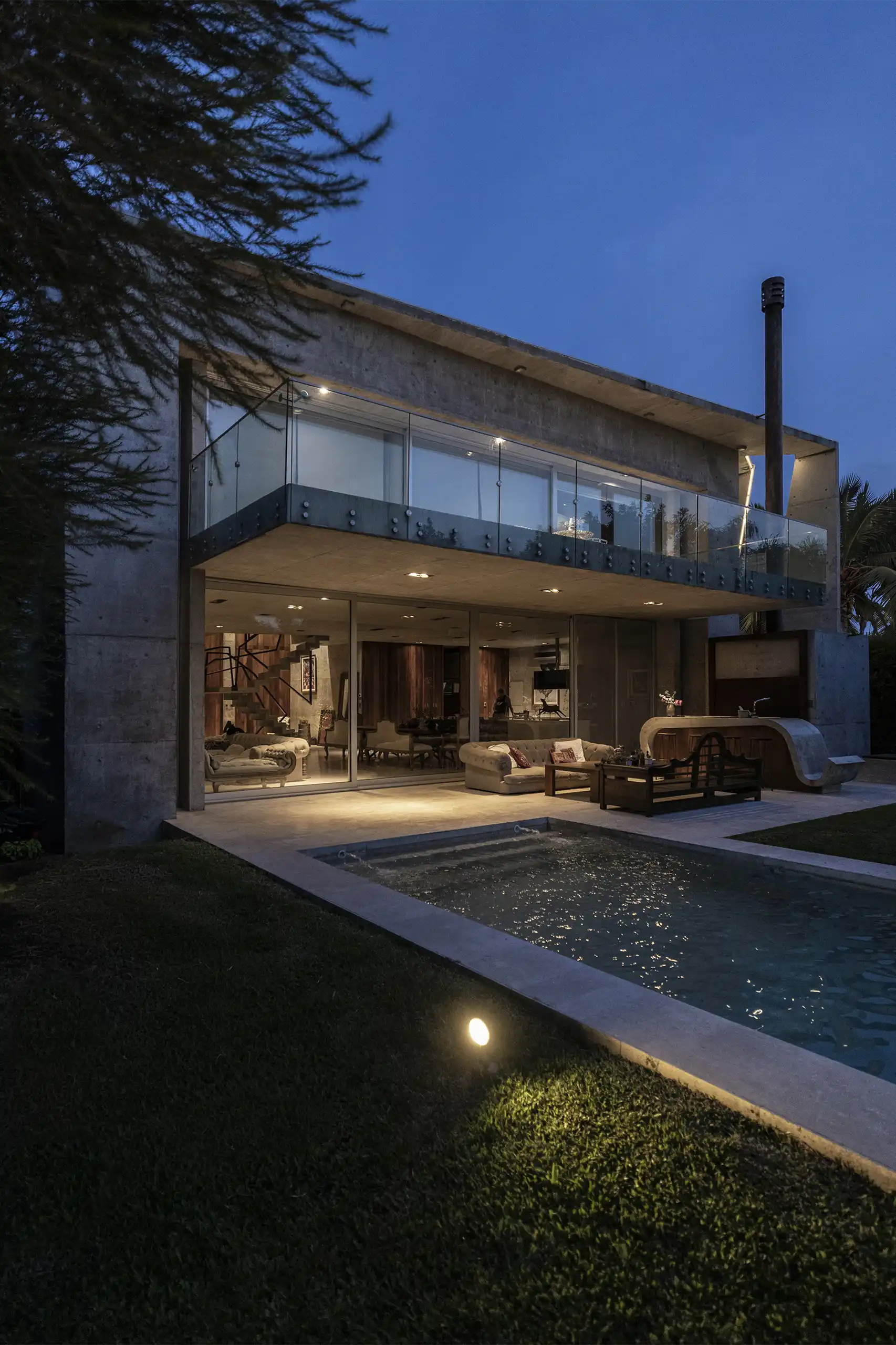
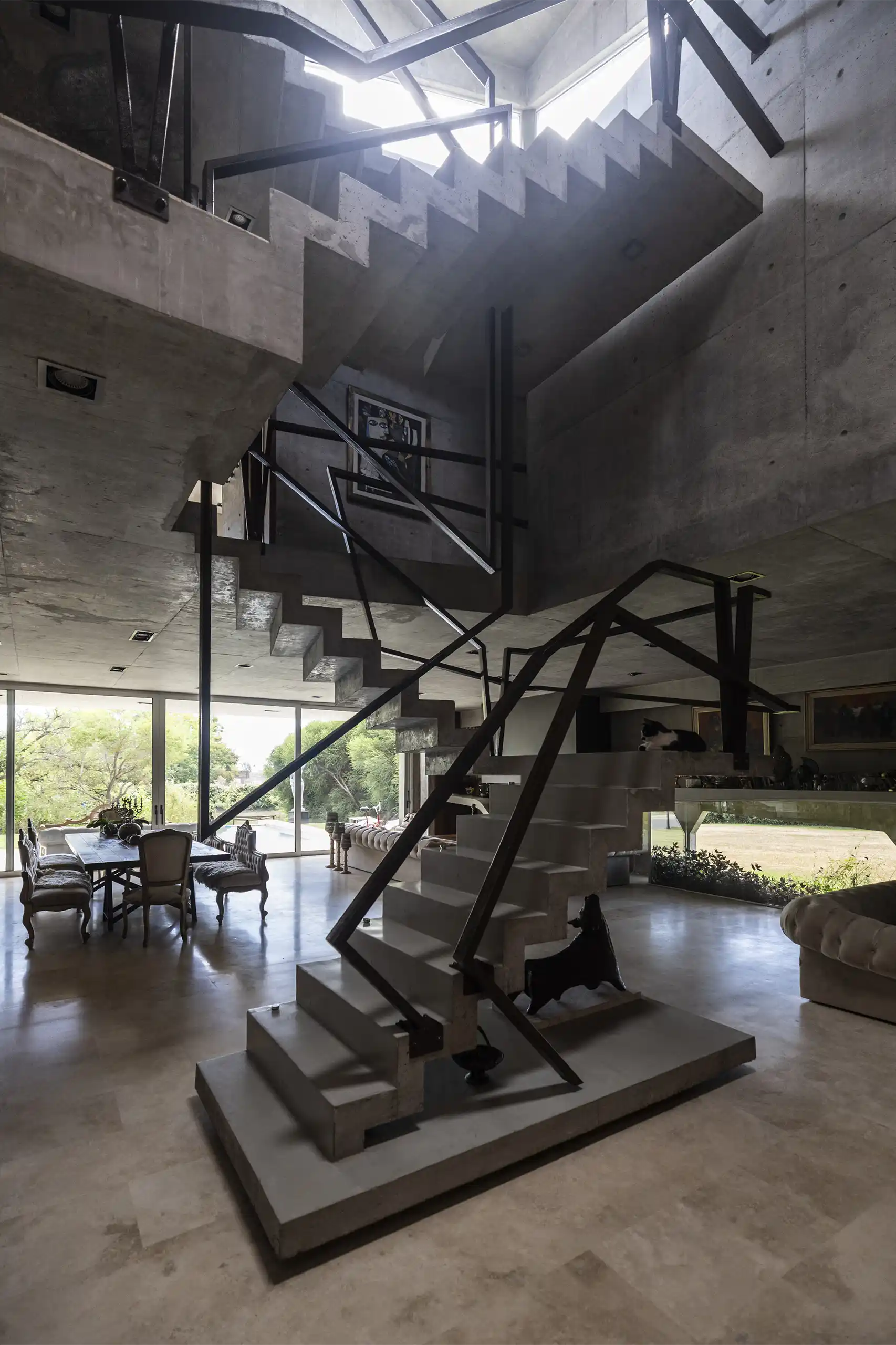
In the social area, a horizontal subtraction opens up the volume within the living and dining spaces. The scale of this opening responds directly to how the space is inhabited — from seated positions associated with rest or gathering around the table. From this vantage point, the landscape is drawn into the house, allowing the exterior to permeate daily life.
This same subtractive strategy, applied at a more human scale, is also used to create an opening that resolves the service entrance, reinforcing the idea that every intervention on the cube responds to a precise spatial logic.
Light becomes an essential material in the architecture. Controlled openings, illuminated vertical planes, and expansive glazed surfaces create a spatial sequence in which the concrete gains depth, nuance, and vibrancy.
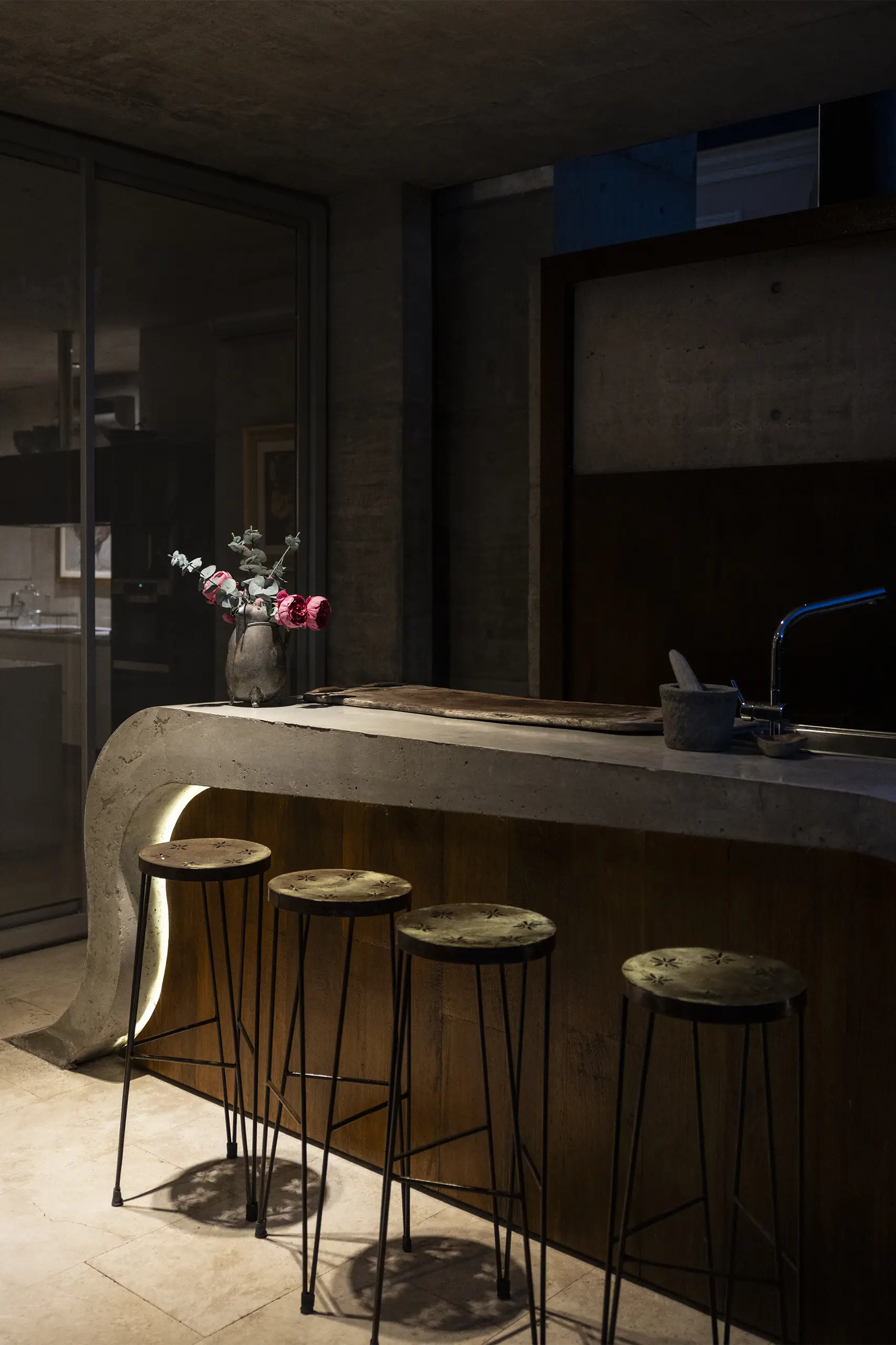
The house is built with a restrained palette of noble materials: concrete, wood, and glass. Concrete defines the monolithic and structural presence of the architecture; wood introduces warmth and tactility; glass dissolves the boundaries between interior and exterior.
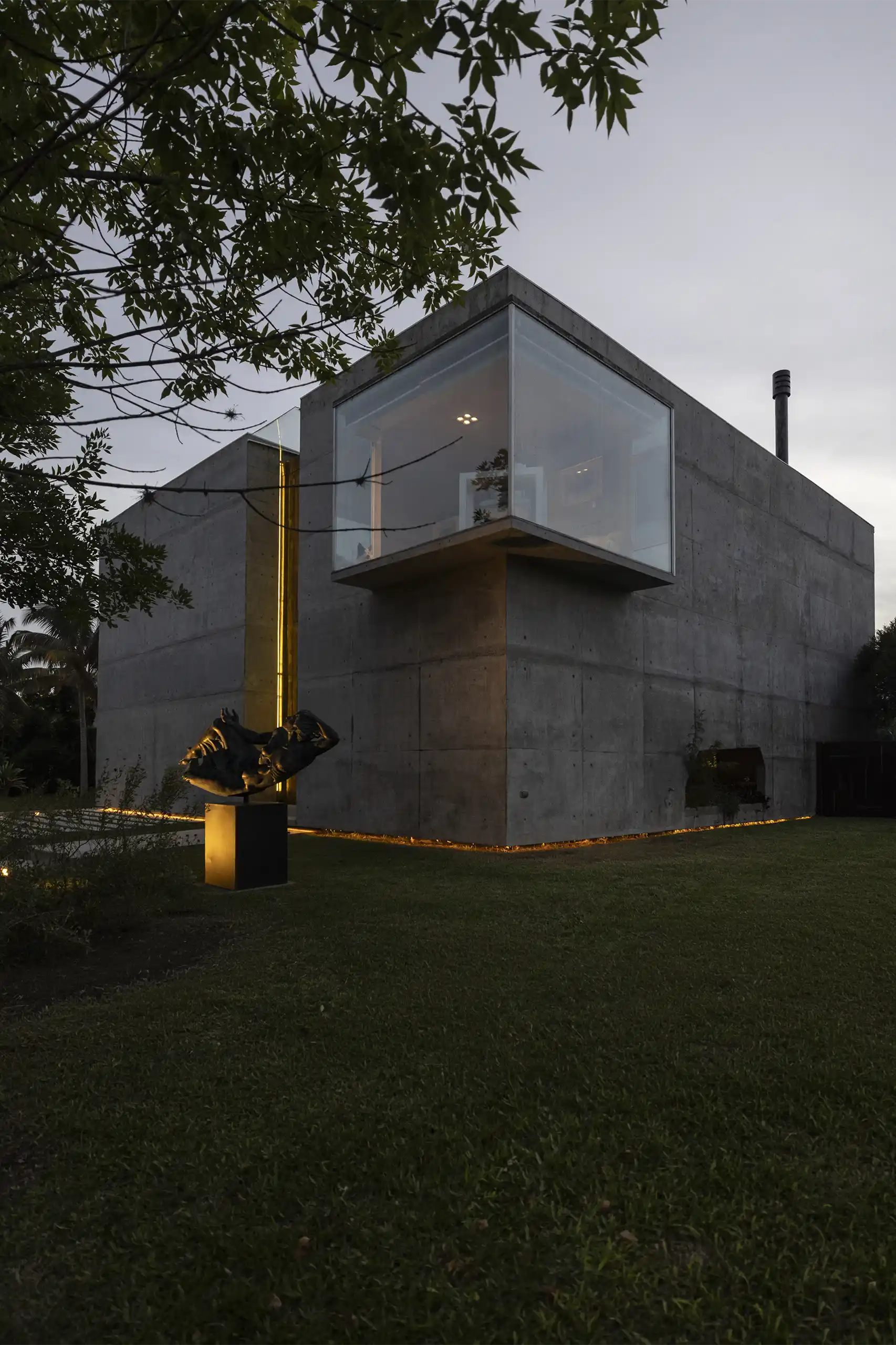
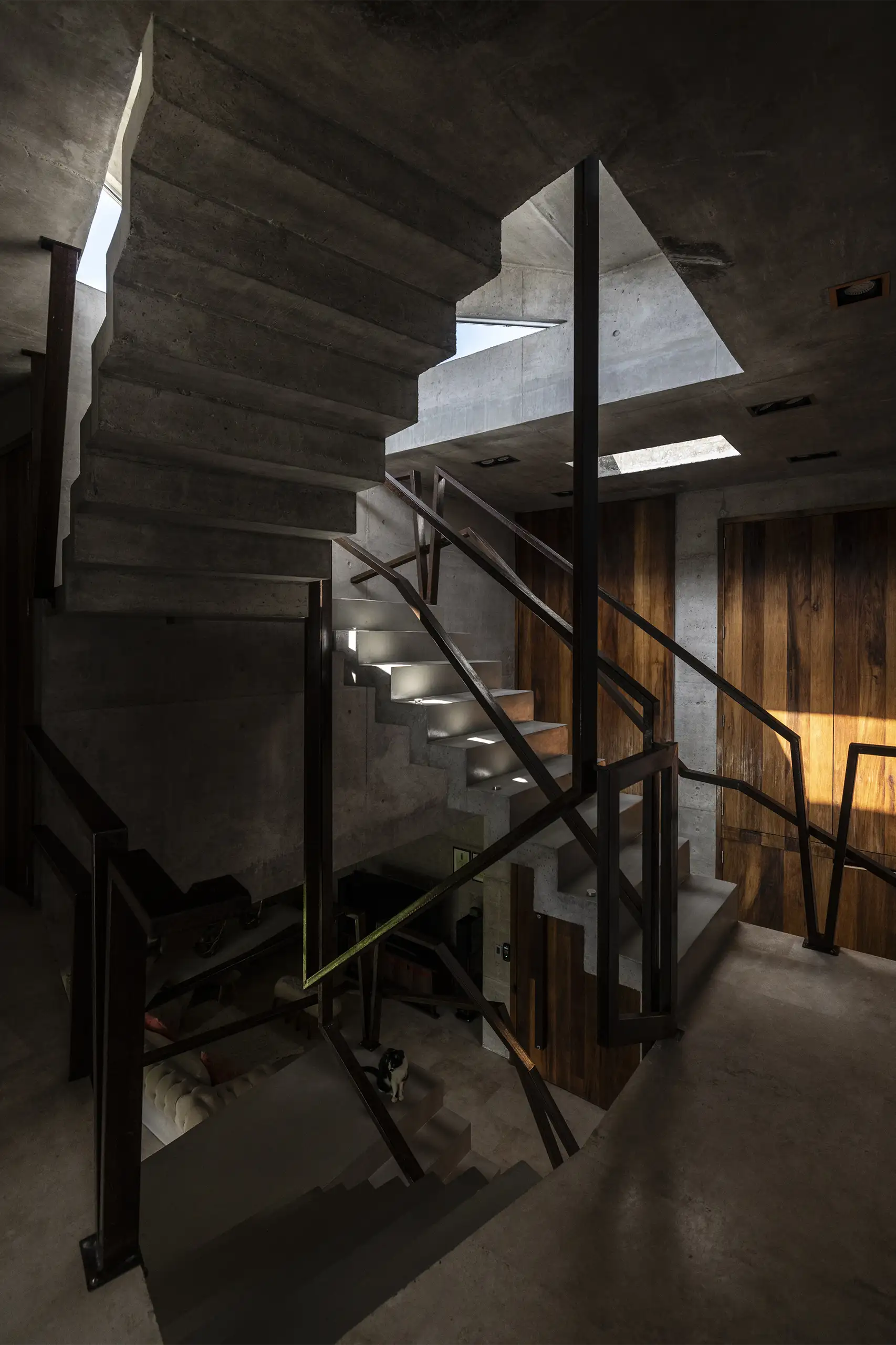
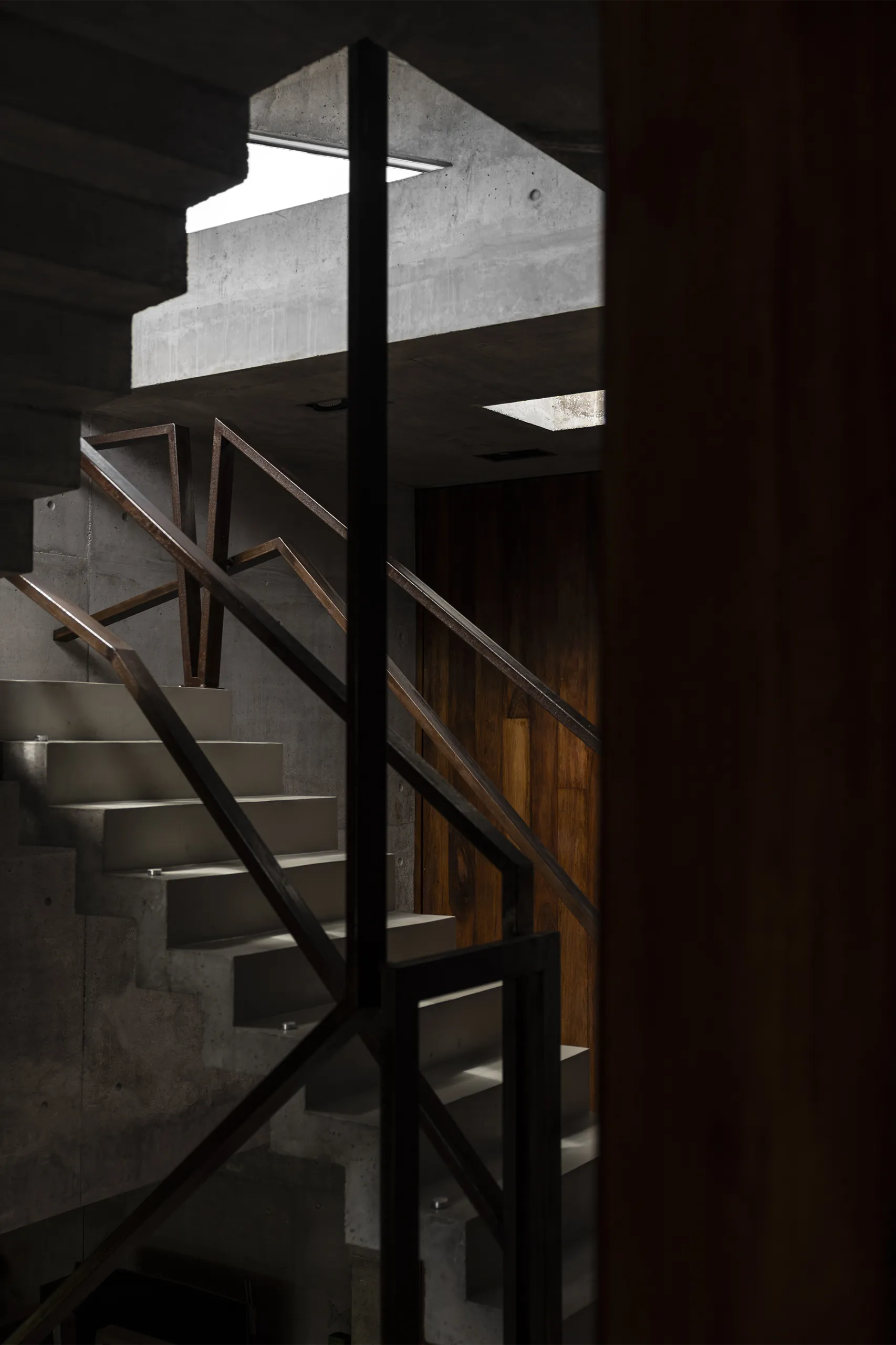
Yet despite its solid appearance, the project also seeks to dematerialize the volume. Through carefully integrated perimeter lighting at the ground level, the cube visually detaches from the terrain, creating the impression of a suspended mass. At night, the house appears as a floating object — a concrete block gently hovering above the landscape. Each element of the house is conceived as a singular piece within a larger composition. The central staircase, lit from above, unfolds as a sculptural element built in situ together with its railing, while openings act as precise frames of either the landscape or the interior life.
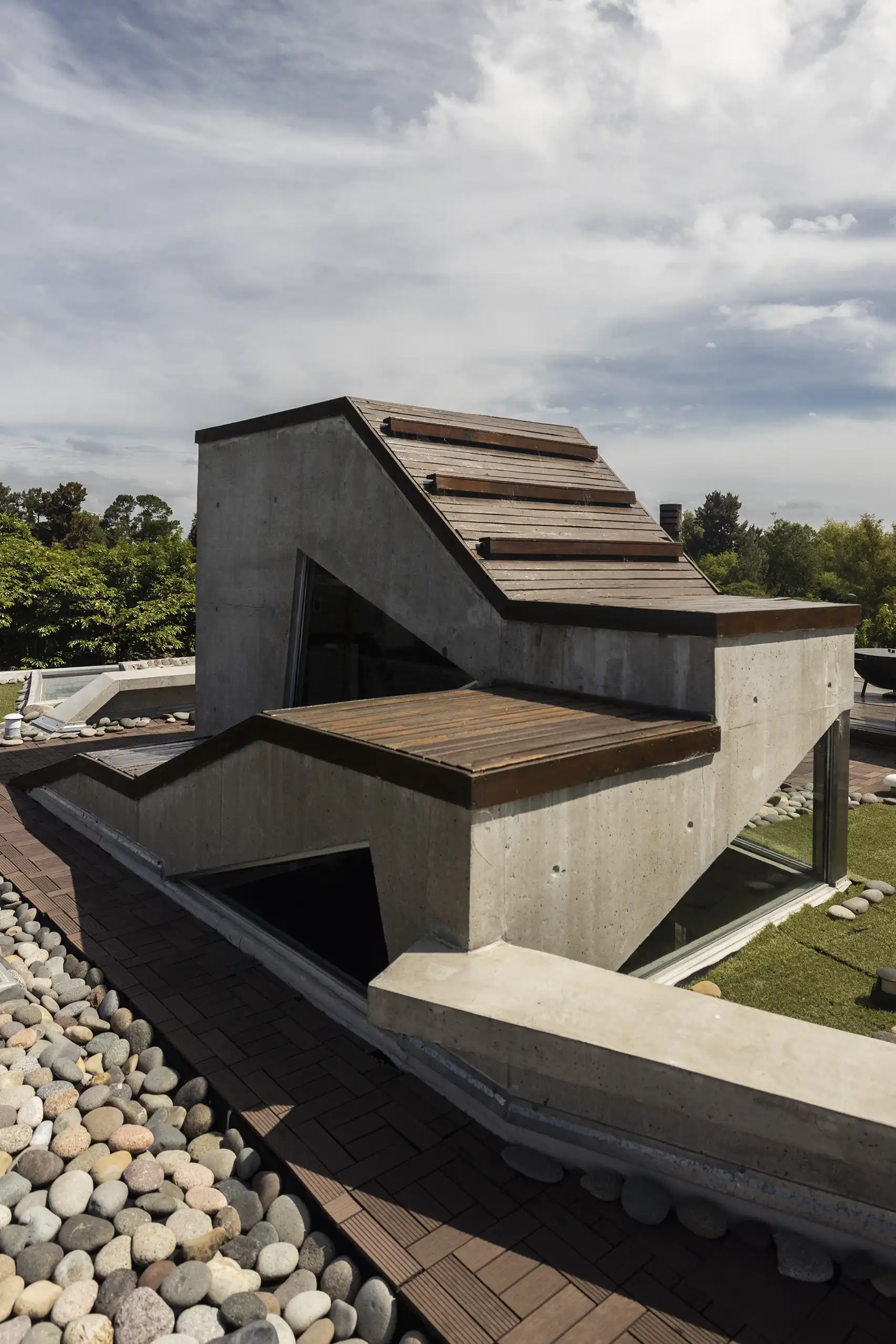
The house also incorporates an active fifth façade: the rooftop terrace. There, the termination of the vertical core becomes an open lookout toward the bay, symbolically evoking the crow’s nest of a sailboat — a reference to the owner’s connection to navigation and to the nautical character of the site.
At one corner of the volume, a glazed element breaks away from the rigor of the concrete as a light insertion. This space, designed as a study for one of the daughters — a writer — projects toward the landscape as a small domestic observatory, a place to contemplate the surroundings and allow inspiration to emerge, where words can begin to take shape.
The house is thus conceived as an architecture of contrasts: mass and transparency, introspection and openness, material rigor and domestic sensitivity. A container for life, art, and landscape, where concrete — far from being a cold material — becomes a medium for light, memory, and dwelling.
As the owner herself describes it:
“We chose the plot for its wetlands, the river, and the surrounding forest. Designing and building the house became, for us, a way of bringing that natural environment fully inside — allowing it to enter and permeate every space. In both simple and complex ways, they achieved this completely.”
— Silvia Soto
Environmentalist and animal rights advocate